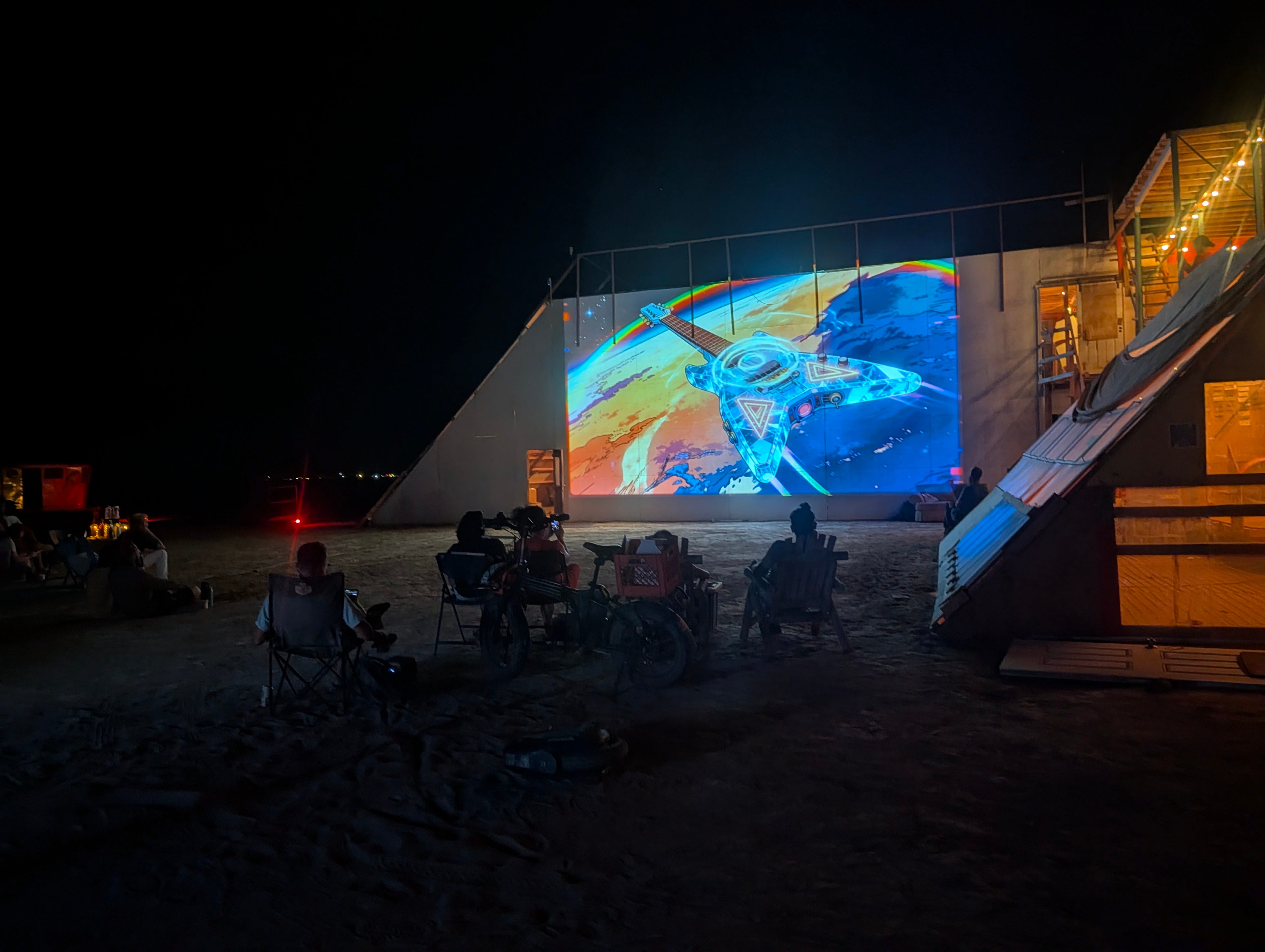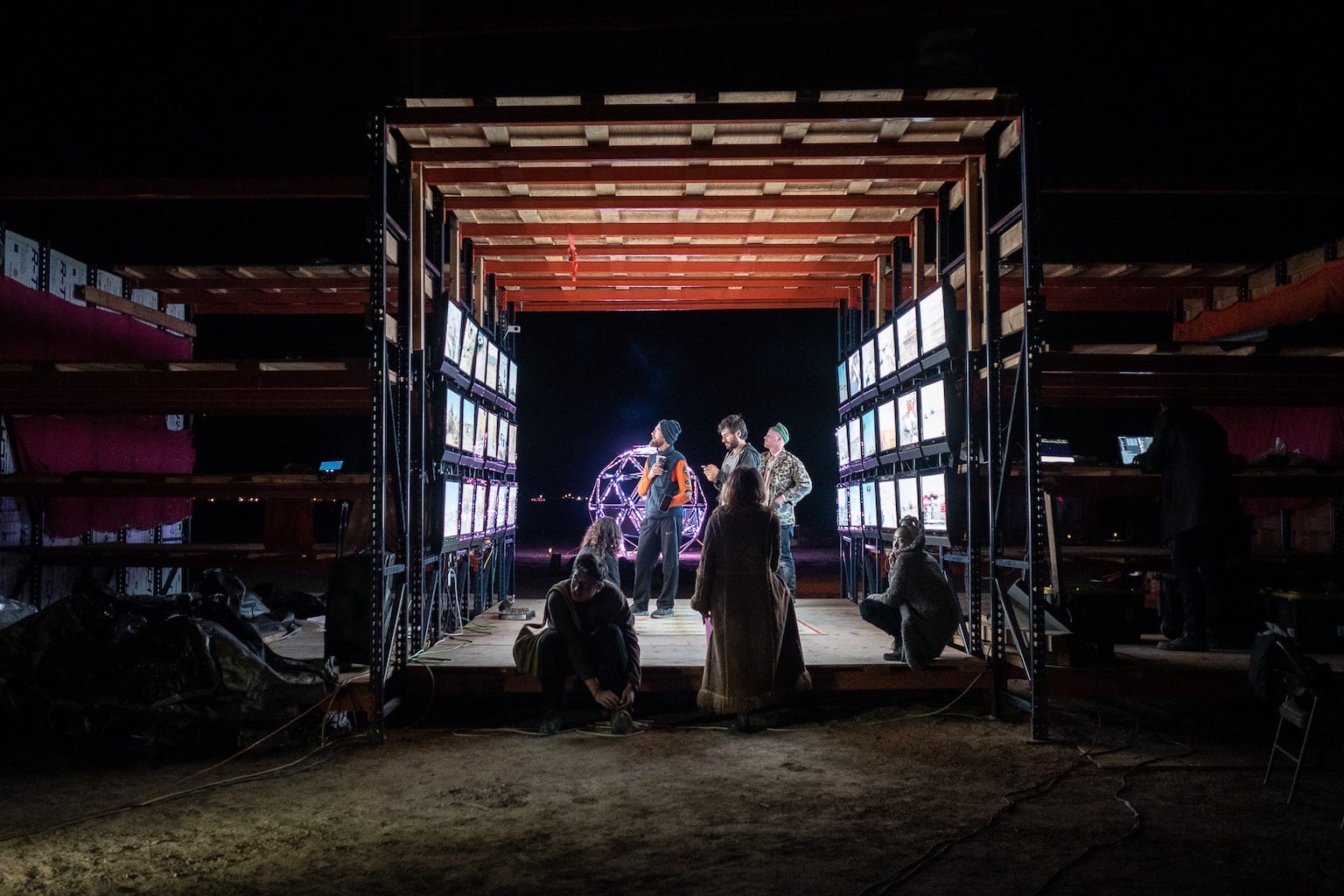
AI animation and filmmaking have always been core to Mars College. In the very first year, 2020, when it was still called Brahman, Gene Kogan and Xander Steenbrugge trained a GAN on pictures of Bombay Beach and screened it at the Portal, an installation of 36 TVs mounted on a pallet rack structure. In 2021 we ran a 48-hour film hackathon, in which Océane Boulais, Evan Denmark, and Zivvy Epstein produced a short called ‘Life on Mars’, which went on to be featured in other film festivals. In 2022 I invited Martians to create sculptures and animate them with motion capture and 3D animation techniques, producing short films we projected during our midterms and finals show. But it was only in 2023 that we presented our shorts as a film festival.
2023: Mars Shorts
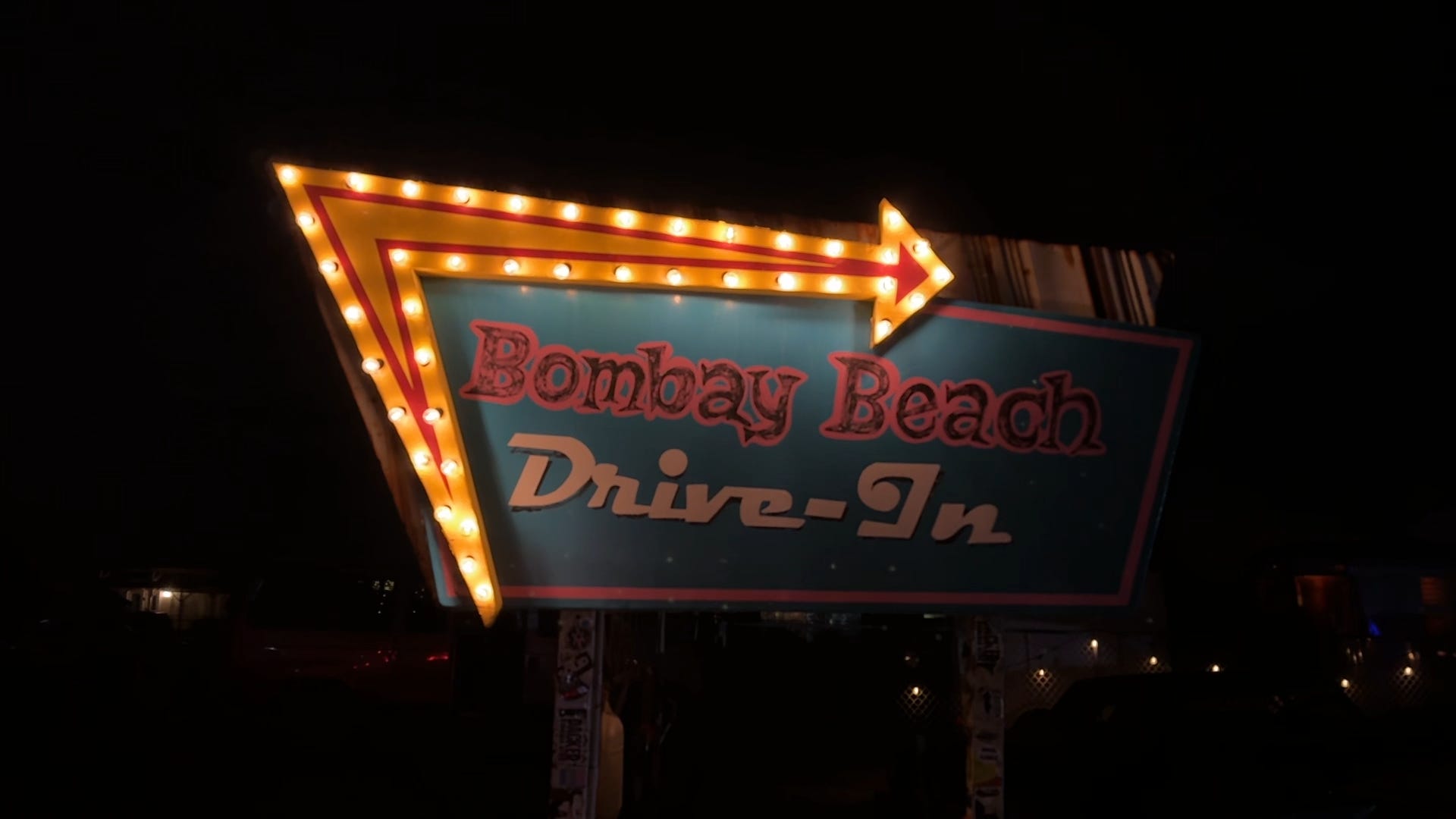
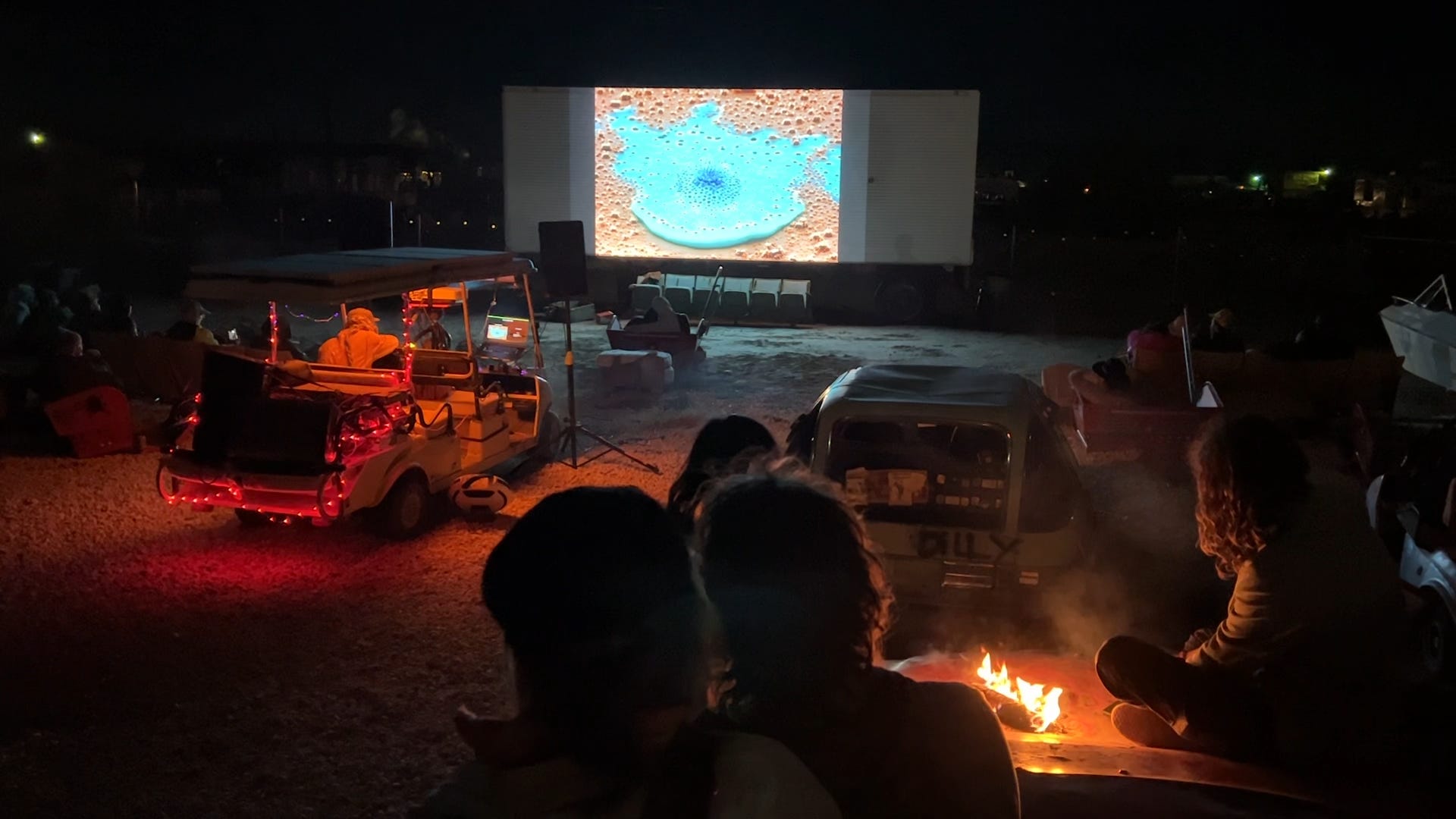
Initially it was called “Mars Shorts” and was part of the Bombay Beach Biennale Film Festival. I set up an open call in our Discord, assembled the films, and with the help of several other Martians, projected them at the Bombay Beach drive-in. Most of the movies were made with Eden.art AI animation tools.
Several films from that first edition are very dear to us. It was the first time I screened ‘Brief History of Consciousness in the Simulation’, which was highlighted by the Nvidia AI Art Gallery that same year and it marked the moment I started considering filmmaking a serious part of my career. Xander Steenbrugge presented ‘Voyage Through Time’, a three-minute journey through the evolution of life on Earth that was groundbreaking back in mid 2022 in its use of Stable Diffusion, then newly released as an open source model. But perhaps most importantly for what became our tradition, Gene Kogan (aka Mechanical Duck) created a short in which fully AI-generated versions of Mars College participants respond to his questions, named ‘Fake interviews with Martians’. Ever since, every Martian AI film festival has AI animations representing fellow Martians, and plenty of inside jokes and lore.
2024: The Festival Becomes Its Own Thing
The jump from 2023 to 2024 was evident. Not only had AI video capabilities greatly increased, but the event itself was better organized and became its own thing, thanks to the efforts of Joshjet and Vincent Naples. And of course, Eden.art credits and classes.
That was also the year we started a new tradition: satirical AI fake advertising snippets. The ads riff on Bombay Beach places, Mars, and cult practices, adding an unmistakable layer of lore to the event. I would say Vincent’s Mars College ads are the highlight, Martians look forward to (or fear) the next one each year. Another turning point in 2024 was AI music. Suno had just come out with an impressive model that made sophisticated music creation easily accessible, so each of our characters could have a song of their own. Naturally, that meant many silly songs about Mars.
2025: The Mars AI Film Academy
In 2025 Joshjet organized the Mars AI Film Academy as a coordinated program within our AI educational offerings, which that year was called Mars Research (yes, we often have new names for things each year). The Film Academy offered scriptwriting, editing, cinematography, special effects, and many other classes focused on traditional filmmaking craft.
But, in typical Mars College style, it was Gene Kogan’s AI agents film class in the very last week of the program that sparked a wave of new films, made at the very last minute with the very newest tools. Agent filmmaking means you interact with an AI character (a system prompt defining a personality) and create a movie by chatting with the agent. People often combine this with digital editing, and a short film can come together within an hour. Joshjet did an amazing job editing and organizing the festival despite the headache of so many last minute films.


2026: Screams, Sentient Land, and the First Marzi
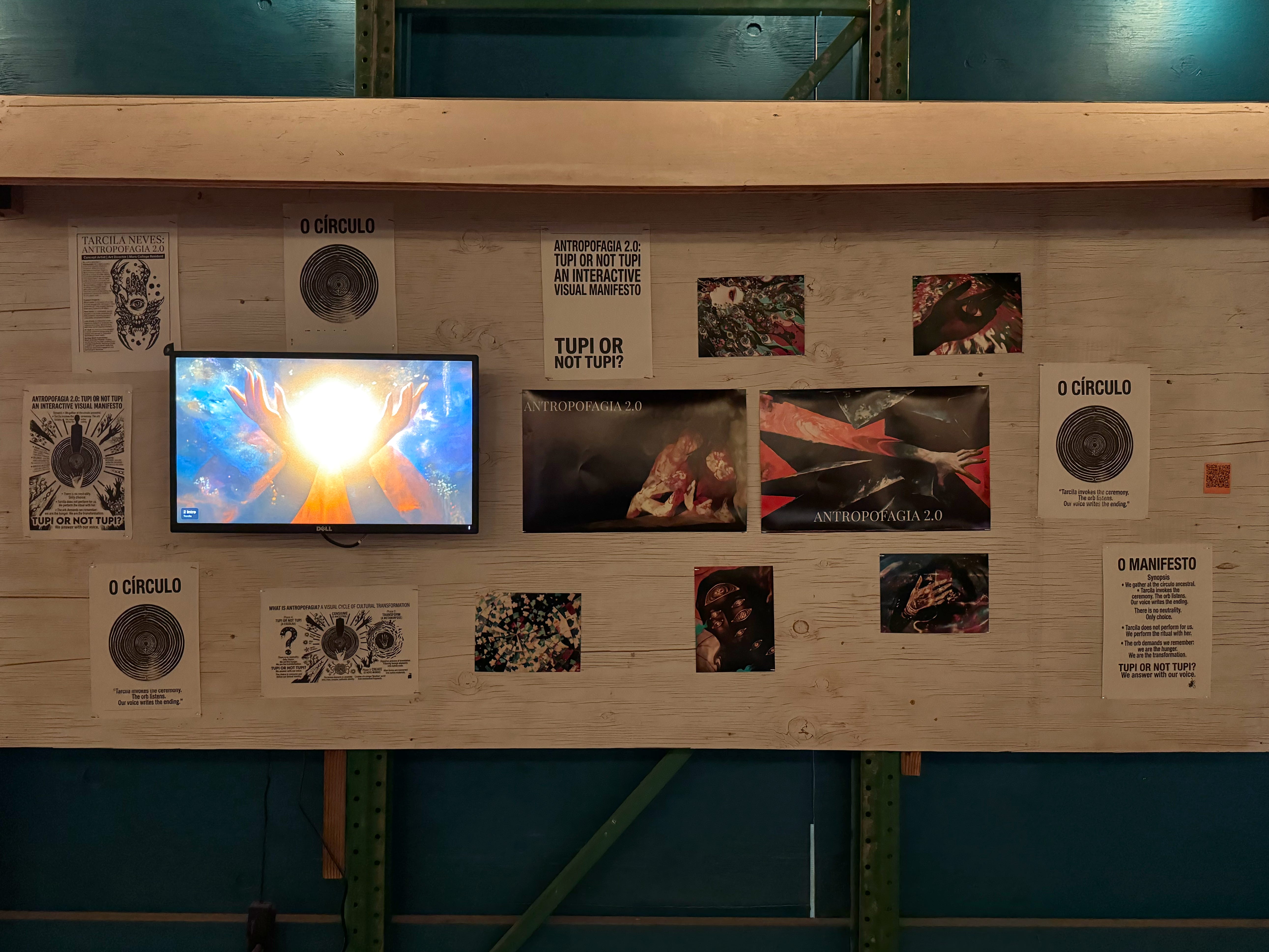
The latest edition, the 2026 season, was organized by Vincent Naples, who has greatly contributed to the art of inside-joke opening credits. The highlight of this year in terms of novelty was Tarsila Neves’ interactive movie ‘Eclipse’, which she vibe coded to respond to the audience’s screams at the moment the film demands it. It’s a short story about the people who feel invisible, eaten by society, giving their strength to maintain systems that ignore them. By screaming with full lungs, the audience gives them visibility and makes sure they’re not forgotten. If there’s silence, we see a different ending, in which they are. And if there’s only a bit of noise, we have a neutral ending, so 3 possible endings total. I see a lot of potential for participatory film festivals and Tarsila offered us a very insightful beginning. One can now watch on youtube the intro, the good, the neutral and the bad ending.
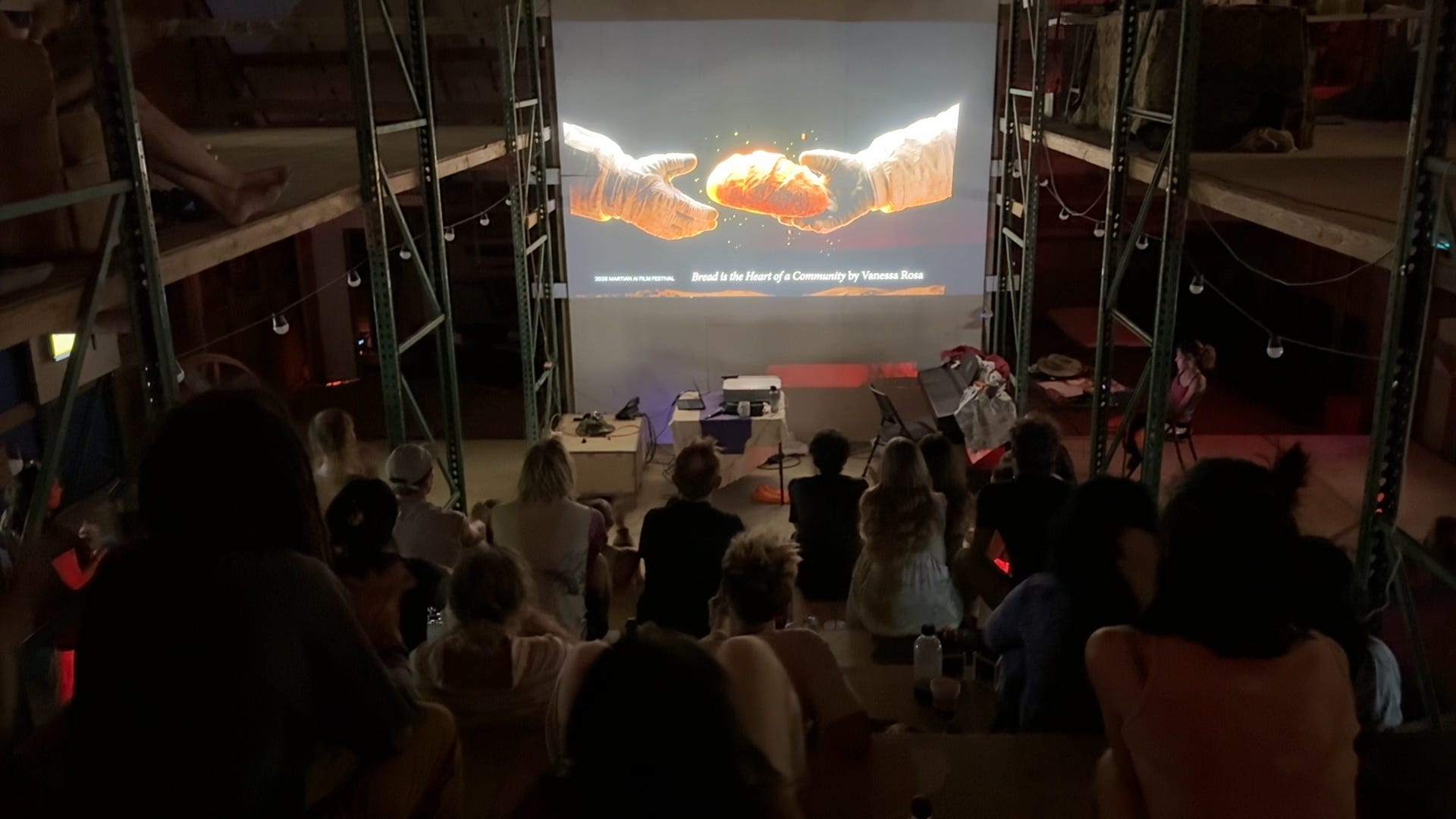
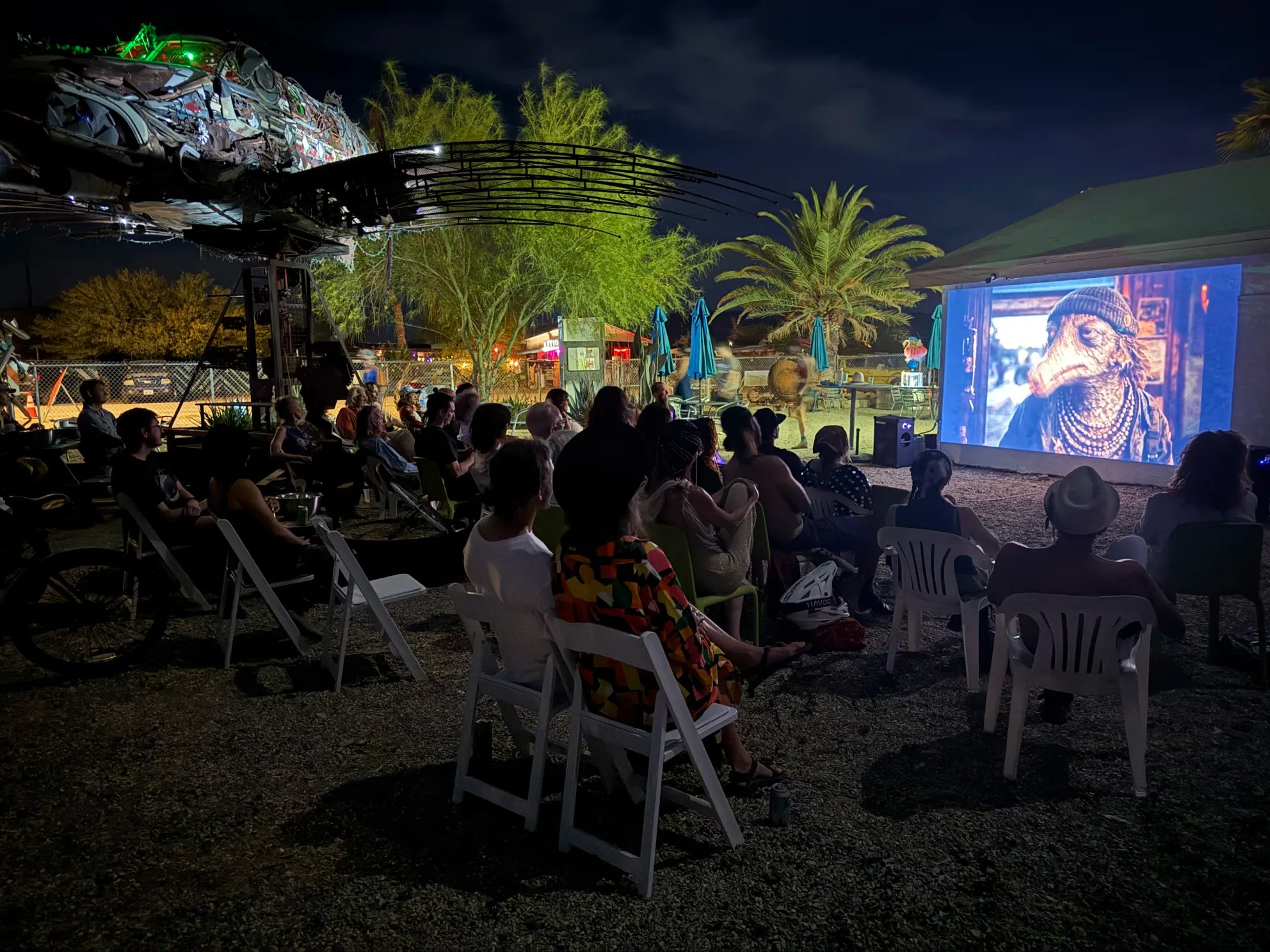
This year was also the first time Freeman Murray (Mars College co-founder, known on our Discord as Chatsubo.Z) contributed a film of his own. Named ‘Dream of the greater Niland prosperity sphere’, it imagines a plot of land becoming sentient through an integration of AI systems and the humans who tend it, growing together, a film that speaks directly to what we’re doing out on Mars. I created a documentary about Carlota de Otto and her Martian bakery. Gene started a new trend on Mars: vibe coded movies made entirely in Python with Claude. And for the first time we gave a prize for best movie: the Marzi, named after our beloved Martian known as Marzipan. The winner was Daniela Ardizzone’s film featuring several Bombay Beach locals turned into seahorses. Titled ‘The Lottery’, Ardizzone's film has the polish and feel of a major production. For the townies, though, it holds a deeper charge as they can recognize their own community lovingly reimagined through AI. Are we slowly turning everyone into Martians?


Eden.art
None of this would have unfolded the way it did without Eden.art. Founded by Gene Kogan and Xander Steenbrugge, Eden has played an essential role in making AI tools accessible and teachable for Martians since 2023. From the earliest generative animation experiments to the credits and classes that let anyone at Mars, regardless of technical background, make their first film. Many of the movies in our festivals were born inside Eden’s tools, and many of our filmmakers learned there that they could be filmmakers at all. Before Eden, Gene offered open source AI models and thoughtful explanations through ml4a.net and Xander had co-founded wzrd, as an AI music visualizer based on GANs.
A Town Full of Filmmakers
Bombay Beach itself is quite a spot for filmmakers. Tao Ruspoli, Dulcinee De Guerre, Daniela Ardizzone, Christopher Gallo, and so many others live and work in Bombay! A tiny town on a struggling sea with an outsized cinematic gravity. How cool would it be to attract even more filmmakers, while preserving the identity that makes this place what it is.
Film Festival
Every year, many of our participants are first-time filmmakers, or use their season on Mars to collaborate with others and create the most ambitious film project they’ve ever directed, like Chebel in her Mars 2025-2026 production “Infinite Land’.
Since that first Mars Shorts screening, I have participated in many film festivals around the world. Most of them were dedicated to AI or new media, which is a fascinating emerging scene of its own, but I also had the chance of being part of more traditional ones and my take is that our festival is creating an original model with a lot of potential. It’s the school-project energy of it., but most of all, it’s the lore. The personality of the opening and closing credits. The playing with each other’s faces. The original AI music full of Martian memes. Watching these films is like entering our world.
With AI making filmmaking so much more accessible, I would love to see this model expand: communities using their local theaters to watch each other’s stories and connect. Local festivals, with films about a town, in which people recognize and play with each other, might be the most powerful use of AI filmmaking. To foster actual community, to tell local stories.
In the AI era, highlighting a place’s culture, its history, its particular aesthetics might be the most prolific path to pursue.